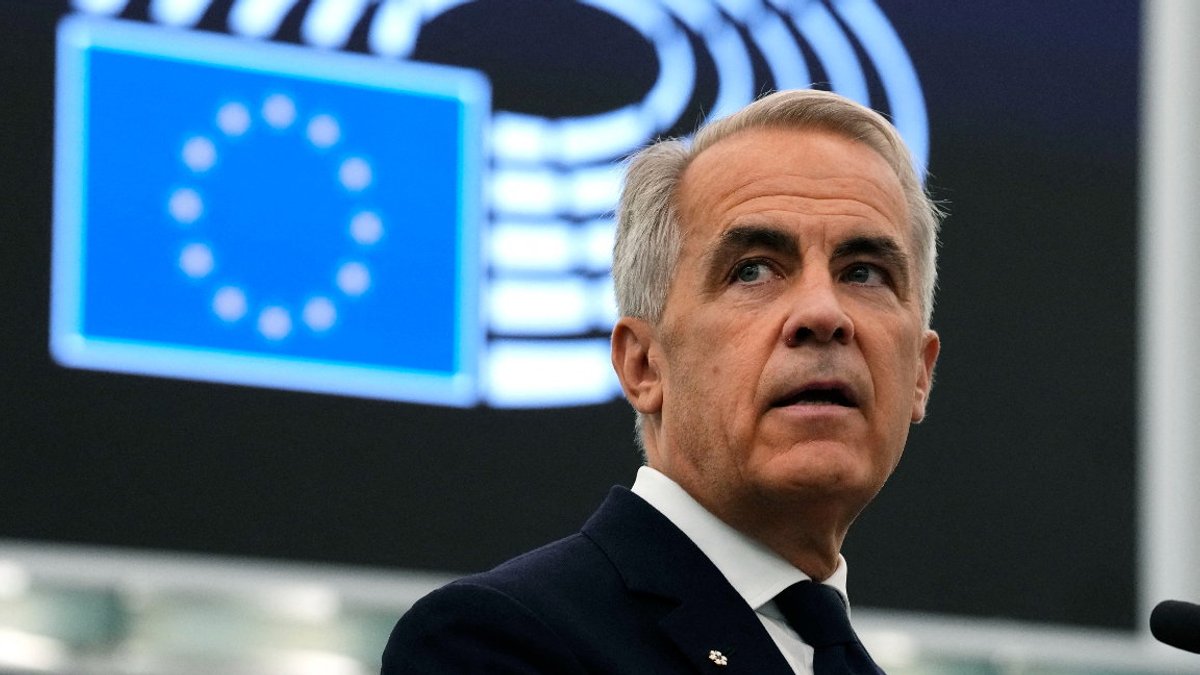
The European Union is planning to name Canada as its first “associate member” in order to counter the growing influence of the world’s largest powers. This new strategic cooperation is set to concentrate on three core areas: tighter integration of supply chains, closer collaboration in defence matters, and joint development of critical underwater infrastructure that supports data and communications traffic.
According to the plan, the alliance is expected to help both sides lessen the risky economic dependence that has developed on the United States and China over recent years. The EU is moving quickly to create a fresh transatlantic partnership as traditional global structures appear to be fragmenting.
Shifting Away from China and the US
European Commission President Ursula von der Leyen warned that the existing international framework is showing signs of collapse. She argued that the Union can no longer be constrained by outdated global systems and suggested that Canada be used as the starting point for a forward-looking partnership.
Both parties are confronting a geopolitical climate in which the dominant influence of China and the United States is putting their economic health and national security at risk. To push back against the intimidation tactics of those superpowers, Prime Minister Mark Carney and von der Leyen discussed an unprecedented agreement that would designate Canada as the EU’s first “associate member”.
German Chancellor and French President React to U.S. Security Strategy
The shift follows a provocative U.S. national-security strategy that warned Europe was moving toward civilizational erasure. German Chancellor Friedrich Merz said “the West” no longer represents a shared value system, but only a geographic label, noting the term no longer unites European nations.
French President Emmanuel Macron warned Europe could disappear within five years if it stays a vassal of an unpredictable United States or falls under Chinese domination, stressing that reliance on external powers threatens the continent’s existence in the near term.
Securing Infrastructures
The proposed collaboration includes deepening the integration of supply chains, harmonising policies that protect economic security, and cooperating more closely in the defence sector. In addition, Europe plans to boost its investments in Canada’s essential raw-material sectors and to study the possibility of importing Canadian liquefied natural gas for future energy needs.
Infrastructure projects are also high on the agenda, with plans to develop new underwater cables that would link Canada, Asia and Europe. This effort is especially important for Canada, which currently lacks its own trans-Atlantic submarine cables and remains vulnerable because a large share of its data and voice traffic passes through the United States.
Reducing Dependence on the US
For Canada, the EU offers access to a market of roughly 450 million consumers, providing a valuable avenue for diversifying its economy and reducing reliance on the United States.
Carney presented the associate-member concept as a way to safeguard prosperity and preserve the freedoms enjoyed by citizens on both sides of the Atlantic. The roadmap for this alliance includes a series of high-level meetings that will be scheduled in the coming months, during which Carney is expected to meet with senior EU leaders to nail down the concrete terms of associate membership.
The Union views Canada as an ideal partner because of its expertise in cutting-edge fields such as space technology, quantum computing and artificial intelligence, together with its abundant energy and mineral resources. Both regions also share common climate objectives and a strong commitment to supporting Ukraine. European Commissioner for Trade Maroš Šefčovič highlighted that this shared set of values forms a key driver of the emerging cooperation.