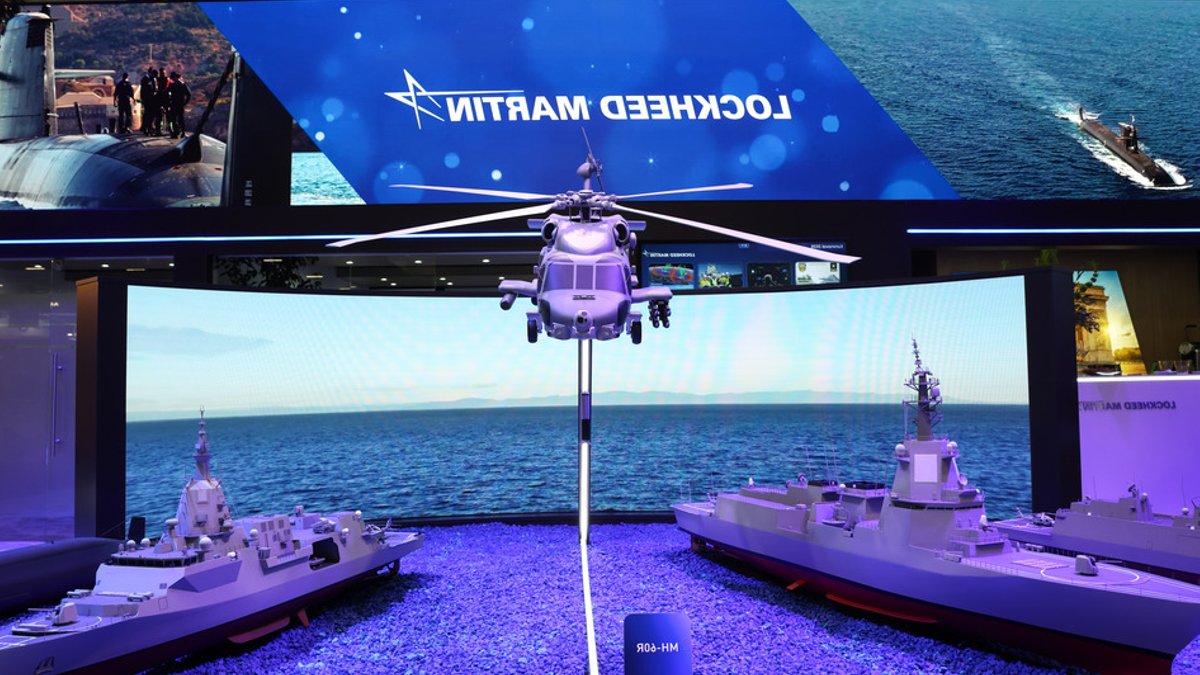
Canada’s defence spending surge is reshaping the country’s industrial map, with new contracts and facilities prompting firms like Lockheed Martin Canada Inc. to expand rapidly in the Atlantic provinces.
Lockheed Martin expands in Halifax
Lockheed Martin has added 71 engineers and technicians in Nova Scotia since July, and it plans to create up to 320 jobs over the next three to five years as Ottawa increases defence budgets.
This growth is linked to a roughly $1 billion contract to deliver a Canadian-developed combat system for the German navy. The same CMS 330 system will also equip Canada’s new River-class destroyers being built in Halifax.
“Being located with the Royal Canadian Navy is hugely important,” said Stephen Isaacs, general manager of Lockheed Martin Canada’s Rotary and Mission Systems division.
Geographic concentration of defence funds
Ottawa plans to more than double annual defence spending to $164 billion by 2035, according to the Parliamentary Budget Office. Most of this funding is expected to remain in established hubs.
Defence procurement expert Craig Stone of the Canadian Global Affairs Institute notes that new spending will likely go to regions with existing shipyards, aerospace plants, and vehicle factories.
Read Also: Reverse Mortgages Gain Popularity Among Canada’s Seniors
Stone commented, “There’s not going to be big changes in shipbuilding just as a function of where the shipyards are in the country,” referring to long-standing facilities in Halifax and Vancouver.
He added that the government’s ability to mandate Canadian-made components could shape the supply chain, especially where domestic technology is available.
Under the federal Industrial and Technological Benefits policy, companies awarded major defence contracts must generally generate economic activity in Canada equal to the value of their contracts. At least 15% of those obligations must involve small and medium-sized businesses.
This allows smaller companies in communications and cybersecurity to enter the defence sector, provided they have the necessary expertise.
For example, the planned purchase of 88 F-35 fighter jets—currently under review—has already secured over $5 billion in contracts for Canadian suppliers, mostly in Ontario and Quebec.
Meanwhile, the government announced a $20.3 million grant for a University of Calgary-led quantum defence research hub, indicating some investment beyond traditional coastal centres.
In the north, a $32 million allocation will upgrade facilities in Yellowknife, Inuvik, Iqaluit, and Goose Bay.
Read Also: Firms listed for SPRV administration services
In Halifax, the DND has allocated funds to modernize CFB Halifax and the nearby dockyard, including upgrades to heating, electrical, and water systems.
Construction of a new submarine support base in Dartmouth, across the harbour, is set to finish by 2033, adding docks, maintenance buildings, and road links for the future fleet.
Regional allocation of new defence contracts and industrial initiatives
The Department of National Defence said it cannot break down major new defence contracts or capital investments by region since early 2025. Instead, it released provincial spending figures for the 2024-25 fiscal year. Those figures do not identify which areas outside established defence hubs are expected to benefit. Ottawa’s Defence Industrial Strategy aims to award 70 percent of procurement to Canadian firms over the next decade, without specifying where the work will occur.
Saab AB is pitching its Gripen E fighter jet as an alternative, proposing Canadian production and assembly. The plan involves IMP Aerospace & Defence in Halifax, CAE Inc. in Montreal, and Magellan Aerospace in Mississauga. An $871-million modernization of CFB Gagetown in New Brunswick awarded its first-phase contract to K-Line Construction in June.
Lockheed Martin’s naval projects rely on software engineering in Halifax and hardware integration in Ottawa. Additional suppliers include OSI Maritime Systems in British Columbia, SEA CAN Systems in Quebec, and Avalon Holographics in Newfoundland and Labrador. The surge in weapons and ammunition demand after Russia’s invasion of Ukraine exposed capacity challenges for manufacturers. “We can’t ramp up like we thought we could,” Stone said, noting that adding production lines or new plants can take years.
Legislation introduced in October outlines the change to the Defence Investment Agency, pending parliamentary approval.
Read Also: Artemis MarketView publishes catastrophe bond agency directory
Key contracts shaping the supply chain
Telesat Corp. secured an initial $2.3 billion contract to provide secure military satellite communications, particularly for Arctic operations. This deal generated an additional $474 million for MDA Space Ltd., which will produce 27 satellites at its Montreal facility.
General Dynamics Land Systems-Canada won a contract valued near $2 billion for 190 armoured combat support vehicles, to be assembled at its London plant. This agreement reinforces the facility’s long-standing role in vehicle manufacturing.
IMT Precision Inc. in Ingersoll is planning a new plant to manufacture components for 155-mm artillery shells, supported by over $300 million in federal assistance. The project is expected to create dozens of jobs initially, with potential expansion as production increases.
General Dynamics Ordnance and Tactical Systems-Canada received three agreements totalling roughly $1 billion to expand ammunition production in Quebec, including upgrades to facilities in Valleyfield and Le Gardeur.
Irving Shipbuilding’s Halifax yard began cutting steel in April 2025 and laid the keel of the first River-class destroyer in June. The $22 billion programme includes 15 vessels, with an $8 billion implementation contract awarded to the shipbuilder.
Canada’s future submarine fleet will be supported by a new base in Dartmouth, featuring docks and maintenance structures scheduled for completion in 2033. Six submarines will be serviced in Halifax, with CFB Esquimalt also hosting maintenance activities.