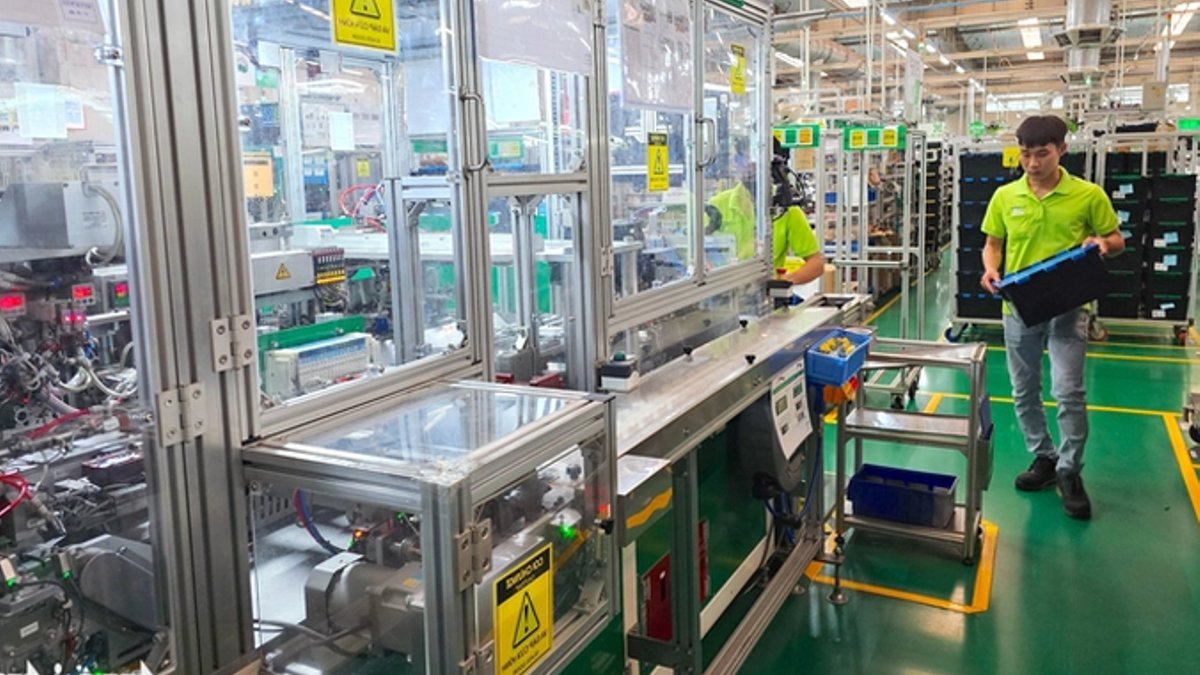
Vietnam FDI inflows surged in the first half of 2026, with total registered foreign investment reaching US$34.65 billion by the end of June, a 61 percent increase from a year earlier.
Capital growth outpaces new projects
Newly registered capital jumped 87.2 percent to $17.39 billion, while the number of new projects rose only 1.3 percent. The disparity suggests investors are allocating more funds to larger, potentially strategic undertakings rather than expanding the sheer count of ventures.
Singapore led the source list with $7.31 billion, accounting for 42.1 percent of the fresh capital. South Korea followed at 31.4 percent with $5.45 billion. Japan and China contributed $1.2 billion and $977 million respectively.
Shift toward higher‑value sectors
Recent projects highlight a move into semiconductors, AI, data centers and other high‑tech areas. Samsung announced a $1.5 billion chip‑testing plant in Thai Nguyen, while Wistron added $24.5 million to its Ninh Binh operation.
Related: Foreigners flock to century-old market for ao dai and wooden clogs
Amkor Technology and Hana Micron continue expanding packaging and testing facilities in Bac Ninh and Bac Giang. These investments signal a transition from Vietnam being seen solely as a low‑cost manufacturing hub to becoming a strategic partner in Asia’s innovation network.
The emphasis on advanced electronics and digital services reflects a broader structural shift rather than a temporary spike in capital.
One reason this matters is that higher‑value projects demand more skilled labor and local supplier integration. When foreign firms bring in sophisticated technology, domestic firms must adapt to meet new standards, which can raise overall productivity.
According to Associate Professor Dr. Nguyen Huu Huan of the University of Economics Ho Chi Minh City, the data illustrate how global capital is reallocating amid supply‑chain diversification and geopolitical uncertainty. He cautions that Singapore’s prominence may reflect its role as a regional financial hub rather than the ultimate source of technology or strategic direction.
Dr. Majo George, dean of the Faculty of Economics at Ho Chi Minh City University of Economics and Finance, argues that the real test of FDI quality lies in technology adoption, added value, and the development of Vietnamese human capital.
Related: Nigeria’s tourism needs marketing, infrastructure boost for growth
He emphasizes the importance of domestic engineering talent, collaborations with universities, and opportunities for local tech firms.
Vietnam still faces uneven capabilities across its industrial base. While a handful of firms have reached tier‑one status, most small‑and medium‑sized enterprises remain confined to basic assembly and low‑margin services, lacking long‑term capital and the ability to meet stringent international standards.
Addressing these gaps may require national supplier development programs that combine technical assistance, certification support and supply‑chain financing, alongside transparent procurement plans from foreign investors.
Ultimately, the country’s path to high‑income status will depend less on the number of foreign‑owned factories and more on how much knowledge, technology and productivity remain in the economy after each project.