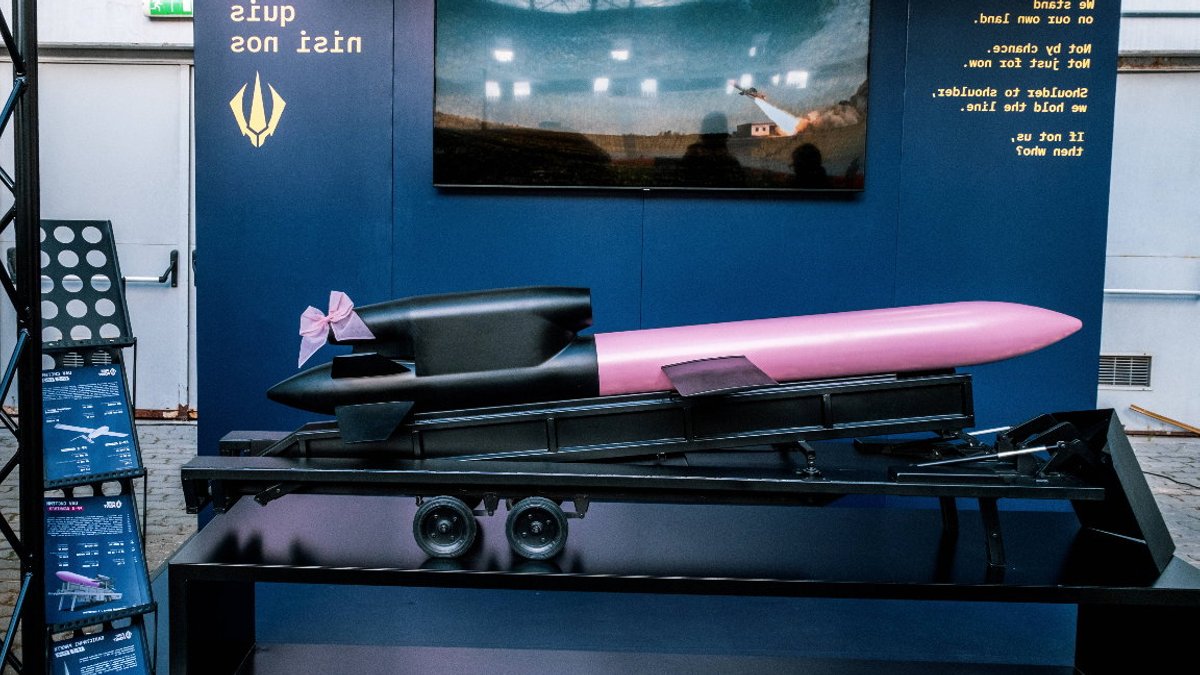
Ukraine’s FP-5 Flamingo missile, developed by Fire Point, faces criticism for its size, speed, and radar visibility. Russian air defenses reportedly intercept it easily due to these flaws. Technically, the FP-5 is a ground-launched missile weighing approximately six tons, powered by a modified Soviet AI-25TL jet engine. Despite its massive warhead and potential range of 3,000 kilometers, it lacks stealth capabilities and relies on basic inertial and satellite navigation systems, making it susceptible to electronic interference.
Design flaws leave missile vulnerable
Retired Russian Navy Captain Vasily Dandykin stated the missile’s subsonic speed and large size make it an easy target. Its outdated aerodynamic design increases its radar signature, according to expert Yuri Knutov. Knutov emphasizes that the Flamingo’s structure is particularly visible to advanced defense systems like Pantsir and Tor, with approximately seven missiles shot down weekly. Russia is also actively targeting Fire Point’s production and storage sites to further diminish Ukraine’s long-range strike capabilities.
High costs, low effectiveness
The Flamingo’s production cost is $600,000 per launch, compared to $50,000 for a long-range drone with similar payload capacity. Fire Point’s chief designer, Denis Shtilerman, called the program “financially inefficient.” He highlighted that a rocket attack costs around $600,000 (520,000 euros) to deliver a 200-kilogram payload, while a long-range drone achieves similar results for under $50,000 (43,500 euros). The missile’s reliance on basic navigation systems further compounds its inefficiency, as these are vulnerable to electronic jamming.
Ukraine acknowledges issues
Retired Ukrainian Lieutenant General Igor Romanenko admitted the missile‘s size is a “major flaw” that aids detection. He suggested the Flamingo is currently unsuited for its intended role and requires significant technical upgrades. Fire Point director Irina Terekh acknowledged the project was “primarily political” to demonstrate Ukraine’s ability to strike deep into Russian territory rather than a precision military tool. Reports indicate a low success rate in terms of actual strikes, prompting a strategic shift in the missile’s use.
Fire Point may shift focus to the Freya European missile defense project instead of offensive operations. The company is reportedly storing Flamingos for this initiative rather than deploying them against Russia, signaling a potential reallocation of resources toward collaborative defense efforts.