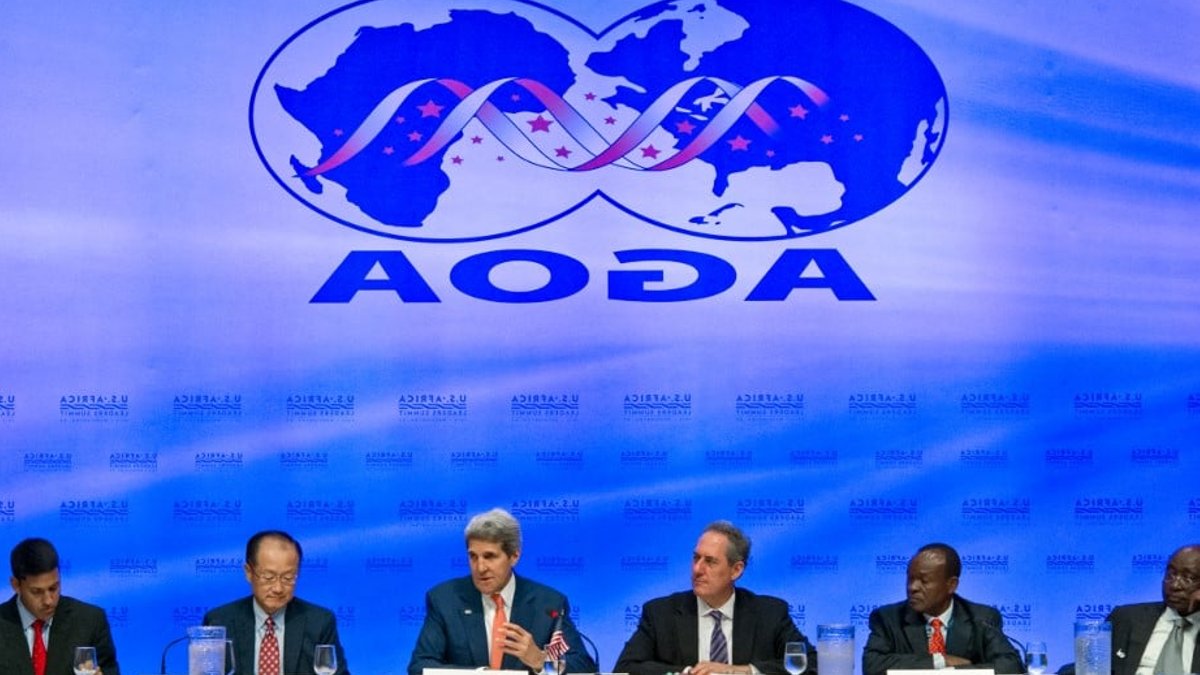
The African Growth and Opportunity Act (AGOA) has been extended through December 2028, giving Nigeria a two-year window to boost its non-oil export strategy. The legislation preserves duty-free access to the US market for up to 6,700 sub-Saharan African goods, including apparel, motor vehicles, agricultural produce, and machinery.
This is the third time the 26-year-old trade pact has been extended since 2015. However, the extension brings Nigeria’s structural export flaws back into focus, as the country has essentially used the duty-free window as a pipeline for petroleum, with little evidence of broad-based non-oil export industries.
Nigeria’s AGOA Utilization
Nigeria has taken more absolute dollars out of AGOA than any other beneficiary, but upward of 95 percent of that value has consistently been crude oil, a product that would have found its way to the US market on normal Most Favoured Nation (MFN) terms. Roughly $277 billion in crude oil alone was shipped from Nigeria to the US under AGOA preference between 2000 and 2022.
In 2023 alone, Nigeria was the largest single source of AGOA imports at $3.8 billion, of which $3.6 billion was from crude oil. Cumulative non-crude AGOA export data from 2000 to 2022 show that Nigeria ranks a distant second in earnings by this measure, with South Africa recording more than five times Nigeria’s earnings.
Kenya and Lesotho, both far smaller economies, are within striking distance of Nigeria on non-oil exports alone. Kenya, with an economy roughly one-fifth of Nigeria’s population and a fraction of its GDP, exported more value under AGOA’s non-oil provisions at $7.3 billion relative to its economic base than Nigeria managed.
Challenges and Opportunities
Obiora Madu, an expert on supply chain and logistics, said Nigeria must revisit the drawing board and build an AGOA export strategy that can be executed during the limited two-year window. Rather than spreading resources across dozens of products, Madu said Nigeria should select five to 10 value chains where it can become competitive within 24 months.
Madu emphasized the need for financing that exporters can actually access, as well as building the supply chain backwards from the market, securing raw materials, aggregating supply, processing products, meeting international standards, and obtaining certification before scaling exports.
Madu cited commodity markets where local prices at certain points in the season can exceed international prices because logistics costs have been pushed into the price of moving the goods.
Related Post: FG denies Nigeria, ECOWAS backed Niger coup
Furthermore, the lack of a national AGOA Utilisation Strategy in Nigeria is a significant challenge, as 19 of 32 AGOA-eligible countries have published such a strategy, including smaller economies like Togo, Malawi, and The Gambia.
Way Forward
Madu said Nigeria should select five to 10 value chains where it can become competitive within 24 months. He also emphasized the need for building the supply chain backwards from the market, securing raw materials, aggregating supply, processing products, meeting international standards, and obtaining certification before scaling exports.
Yusuf argued that until productivity goes up and costs come down, competitiveness will remain low.
Nigerian exporters at a workshop in 2024 were told that some shipments of Nigerian yams had been rejected because of improper processing and storage practices.
Madu also pointed to traceability, packaging, sanitary and phytosanitary compliance, and testing as key levers to becoming visible to foreign buyers. With the two-year extension of AGOA, Nigeria has a narrow window to boost its non-oil export strategy and become a competitive player in the global market.
Nigeria must take a more strategic approach to utilizing AGOA. By focusing on a few key products and building a robust supply chain, Nigeria can increase its non-oil exports and reduce its reliance on crude oil.
The specialized developmental institutions, such as the Nigerian Export-Import Bank (NEXIM), have a key role to play in supporting the export sector, and their efforts should be complemented by the commercial banks.