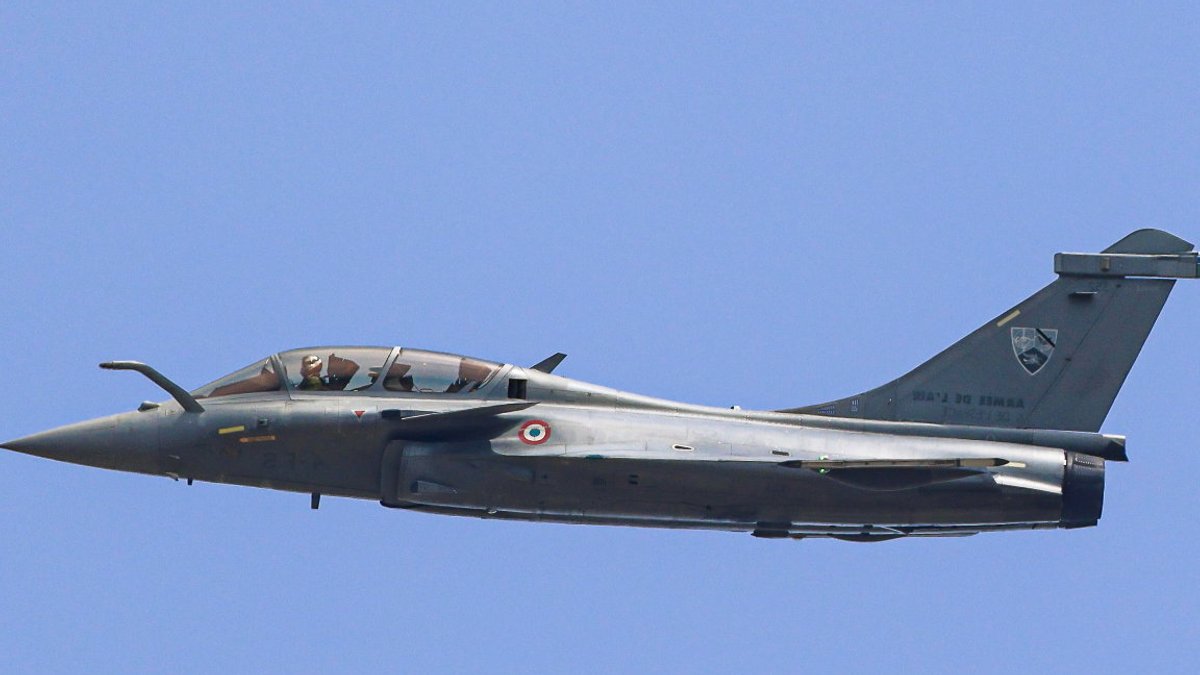
France will station its nuclear-armed Rafale fighter jets across multiple European locations, including a possible deployment in Belgium, as part of efforts to diminish dependence on U.S. security commitments. The plan extends France’s nuclear deterrent beyond its domestic bases, with talks already underway with ten European partners. Under the arrangement, host nations would not control the weapons, which would remain under exclusive French authority.
President Emmanuel Macron is spearheading this initiative to harden Europe’s defenses against Russian aggression by establishing a more dispersed nuclear presence. Sweden, Norway, Finland, Denmark, Poland, Greece, Belgium, the Netherlands, Germany, and the United Kingdom have shown interest, though the extent of cooperation differs by country. Finland, for instance, will restrict its role to intelligence exchanges and consultations, opting not to host weapons during peacetime.
France is finalizing bilateral agreements to integrate its nuclear-capable Rafales into allied airspace, incorporating shared early-warning networks and secure communication channels. The strategy aims to spread forces across multiple sites, complicating potential strikes by adversaries. A deployment to Germany’s Nerfenich airbase in July marked the first operational move, while joint Franco-British nuclear exercises in August tested strike scenarios using French Rafales alongside British Typhoons.
Read Also: ByteDance Founder Zhang Yiming Reclaims China’s Richest Title
This development signals rising doubts across Europe about the reliability of U.S. nuclear guarantees. As the only EU member with its own arsenal, approximately 290 warheads, the country views the expansion as a means to reduce reliance on America’s “nuclear umbrella.” The program’s initial deployments are scheduled to begin by March 2026, though full implementation could extend over several years.
Unlike NATO’s model, where the U.S. shares nuclear weapons under shared command arrangements, France will maintain sole decision-making authority over its arsenal. No participating nation will gain custody of the weapons, nor will there be an automatic nuclear response to attacks on allies. Deployment decisions rest entirely with the French president.
For European states concerned about Russian advances, the plan offers a way to reinforce deterrence without full U.S. participation. However, the lack of direct control over the weapons, and the absence of a guaranteed French nuclear response, means the arrangement serves as a supplement, not a substitute, for existing security partnerships. The emphasis on dispersal and adaptability suggests France is favoring flexibility over formalized alliances.