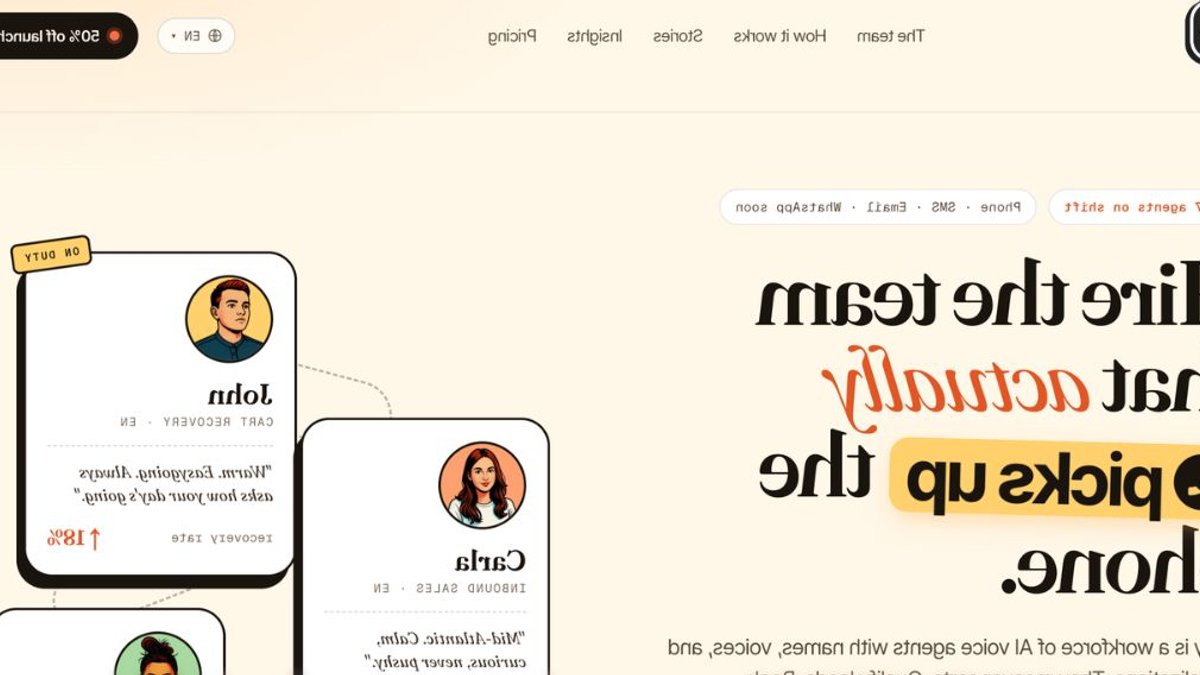
Callsy markets a AI voice platform aimed at recapturing revenue lost to abandoned carts, reducing appointment no‑shows, and automating outreach across phone, SMS, and email.
The tool scales quickly.
How the AI agents work
The service offers named voice agents that handle specific tasks such as cart recovery, win‑back campaigns, booking, or inbound sales. Each agent can call, send a text, or email a prospect, and the company says WhatsApp support will follow later.
Supported languages exceed 40, with regional accents and voice personas designed for local tone. Pro+ customers may clone a custom brand voice, which could help keep messaging consistent.
Triggers for the agents include abandoned carts, missed calls, or lapsed customers. Integrations list Shopify, WooCommerce, Klaviyo, Omnisend, WordPress, HubSpot, Make, and Zapier.
Performance claims and pricing
According to the review, reported outcomes include an 18 %–32 % average recovery on abandoned carts, a 92 % show rate for clinic bookings, and a 22 % reactivation rate for win‑back flows. The platform also claims a noticeable lift in lead qualification when using voice calls versus slower channels.
Pricing starts with a Pro Plan listed at roughly €49 per month during a launch discount, regular price near €99. The plan provides about 380 “actions” each month, up to six AI agents, and access to voice, SMS, and email channels. Exceeding the action limit triggers extra fees. No long‑term contract is required, and setup is free with a seven‑day money‑back guarantee. Activation reportedly takes about five minutes.
Related: Почему онлайн-радио стало удобнее традиционного вещания
Higher‑volume tiers and HIPAA‑eligible options exist, though details are not publicly disclosed.
Callsy’s compliance stance includes GDPR adherence, EU hosting, and TCPA compliance for outbound calls. Data handling and AI interaction disclosures follow EU and selected U.S. regulations.
For businesses that run Shopify or WooCommerce stores and see significant checkout abandonment, the platform promises quick impact. Service‑oriented firms such as clinics, salons, and home‑service providers dealing with high no‑show rates may also find value. The system is less suited for enterprises demanding deep customization, handling emotionally charged calls, or requiring extensive technical support beyond scripted interactions.
One thing to keep in mind is that voice‑AI tools often assume a fairly linear conversation flow. Companies that rely on detailed negotiation or complex problem solving might hit a ceiling with a scripted agent.
From a broader perspective, the rise of AI‑driven voice outreach reflects a shift toward omnichannel engagement. As consumers grow accustomed to interacting with brands via text and chat, adding a voice layer can fill gaps left by purely visual or typed communication, especially in markets where phone contact remains a trusted channel.
Overall, Callsy occupies a niche among AI voice automation solutions, particularly for e‑commerce and service sectors. Its multilingual support, regulatory compliance, and ready‑made integrations align with common marketing stacks. Yet, potential users should weigh the limited customization options and the lack of publicly available enterprise‑level pricing before committing.