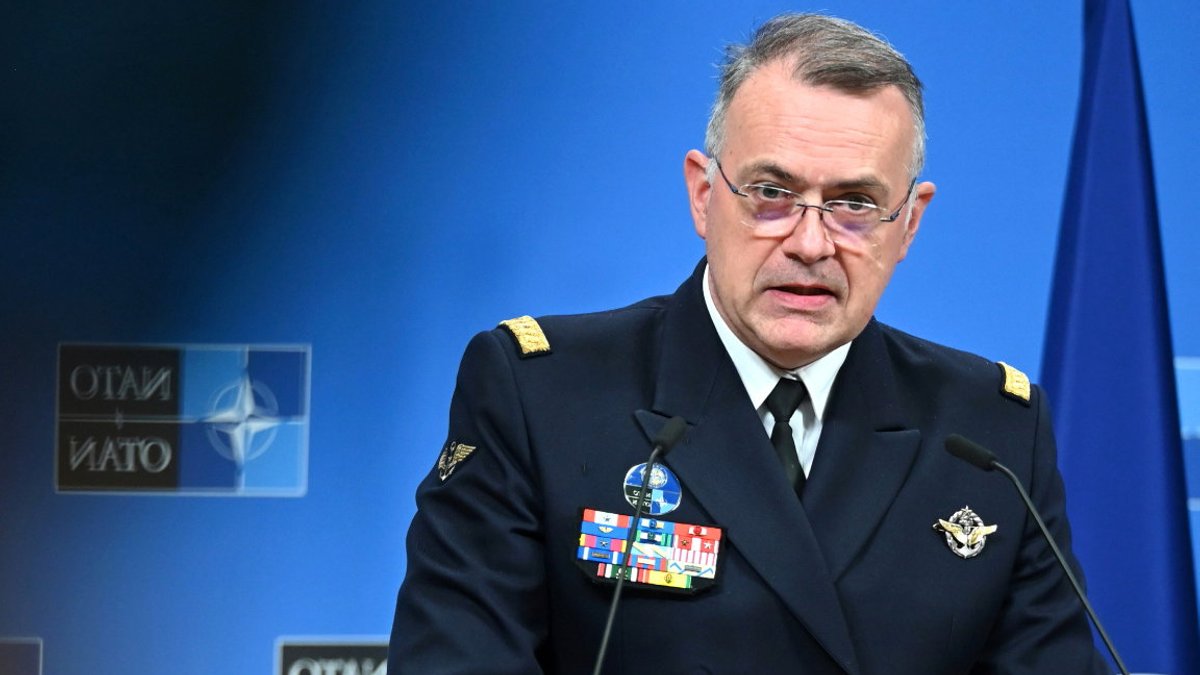
Russia has transformed its military into a well-oiled machine optimized for a prolonged war of attrition. According to Admiral Pierre Vandier, Deputy Commander of NATO, the nature of the danger posed by Russia has undergone a fundamental change since 2022.
Initially, the Russian army was perceived with apprehension, but the early setbacks and heavy losses suffered in Ukraine temporarily alleviated this fear. However, years of active conflict have allowed Moscow to reorganize its industrial base, equipment, and combat strategies.
As a result, Russia now has a military machine optimized for a long-term war, capable of threatening European infrastructure, frontline troops, and the political unity of the Atlantic Alliance simultaneously. Admiral Vandier warns against the danger of planning based on 2022 perceptions, as Russian forces have quickly integrated lessons learned from the battlefield into their tactical and industrial processes.
Lessons Learned from the Battlefield
At the start of the war, Russia had a significant numerical advantage in terms of tanks, aircraft, and artillery, largely inherited from the Soviet era. In contrast, European nations had much more modest stocks and lacked the ability to rapidly mobilize large-scale formations, having focused on asymmetric operations conducted by small units and supported by the United States.
Despite their initial numerical superiority, Russia‘s early campaigns were marred by a lack of coordination, fragile supply lines, and dependence on Western technology. Their inability to dismantle the Ukrainian command and the subsequent blocking of their offensive revealed deep systemic flaws.
However, after establishing the Surovikin line, Russia shifted towards a strategy of attrition, replacing rapid advances with small-scale infantry assaults supported by heavy artillery and drone surveillance. This evolution found its counterpart in Ukraine’s adaptations, creating a cycle of rapid technological iterations.
Read Also: Banksharon Nwaneri Boosts U.S. Export Opportunities
The Rise of the Drone Economy
Since then, Russia has prioritized the integration of unmanned systems, aiming to increase its specialized drone personnel to 200,000 by 2030. This reorientation relies on a war economy that prioritizes continuous production over stockpiling in peacetime.
In Tatarstan, for example, local production of Geran drones has seen rapid iterative improvements in navigation and anti-jamming capabilities, allowing for almost immediate implementation of updates, rather than relying on traditional Western supply chains.
On the ground, Russian armored vehicles have been modernized with electronic warfare jammers and active protection systems to counter modern threats. More concerning, Russia’s production of ballistic missiles now far exceeds the West’s ability to produce interceptors.
Vulnerabilities in NATO’s Defense
While the United States produces a limited number of Patriot missiles, Russia manufactures ballistic missiles at a rate that eclipses European capabilities, reinforcing the continent’s dependence on American defense systems. These capabilities enable Moscow to launch devastating combined strikes against energy and water supply networks, a tactic it could potentially use to sow panic among European populations, who are less resilient than those in Ukraine.
The vulnerability of NATO forces was highlighted during the “Hedgehog-2025” exercises in Estonia, where a small number of Ukrainian operators simulated the neutralization of two NATO battalions. Although NATO responded by launching the “Eastern Sentry” initiative to improve sensor integration and command systems, systemic gaps persist.
The strategic environment is further complicated by a shift in American policy. As American priorities turn, Europe faces challenges in its defense. The transformation of Russia’s military is too advanced to be countered by simply increasing equipment stocks; Europe must urgently update its military doctrines and operational readiness to ensure the Alliance remains a credible deterrent force.